
Build Spalding County Ownership History
The newest deed anchors row one. Log every earlier transfer as its own event, checking the land description before accepting any name into the timeline. The local GSCCCA good-through page gives the best published clue about online depth. When sources disagree, the Clerk's official index controls.
| Source | Years It Covers | Where Held | What It Shows |
|---|---|---|---|
| GSCCCA real-estate index | Local display begins 01/01/1989 | Online statewide service | Party, instrument, date, book/page, and images when offered |
| Official deed books | Earlier and missing entries | Spalding County Clerk | Recorded deed text and legal descriptions |
| Recorded plats | Varies by book and subdivision | Clerk index and record room | Lots, phases, easements, roads, and record references |
| Archival finding aids | Pre-index historical trail | Georgia Archives and FamilySearch | Microfilm, county cards, books, tax and estate context |
Spalding's local table showed a 1989 start. That gap does not erase older deeds. It simply sends the earlier chain to the Clerk's deed books and archival routes, even though the generic GSCCCA description claims every county is covered since at least 1999.
Reconstruct Spalding County Deeds Backward
Treat the GSCCCA Real Estate search as a finding aid. The Spalding County Clerk remains the official recording source. A name match is only a lead until the property description matches too.
- Copy the current owner and parcel description from the assessor result.
- Search that owner as grantee, then open the newest matching conveyance.
- Record the grantor and search that party as a grantee over an earlier span.
- Compare legal descriptions, prior references, easements, and partial-interest language.
- Repeat to the target date, then continue through deed books past the online boundary.
- Grantor
- The party conveying the interest described in a deed.
- Grantee
- The party receiving that interest.
- Chain of title
- The ordered series of instruments linking ownership over time.
- Legal description
- The land description used to distinguish the tract from a mere street-name match.
Security deeds, assignments, and releases track financing, not ownership. Never log them as owner transfers; read the exact instrument type and the full deed before deciding what changed hands.
Match Spalding Plats and Owners
Plats explain many chain breaks. Crestwick Phase 2 ties tax parcel 231 01011 to deed book 4788 and plat book 24, page 498. County Line Estates shows a revised final plat covering lots 9 through 18. Ash Farms sits in a different category. Its 367.523-acre document lays out a proposed 179-lot plan, not a recorded final subdivision. Keep those labels distinct. Compare parent-tract references and revision dates before tying old owners to a new lot. A plat maps geometry, not every later owner.
Bridge Old Griffin Owner Names
The 1878-79 Griffin directory lists old names with wards, street sides, businesses, real-estate listings, and cemetery clues. Its 53 pages can seed deed-book candidates. Directory entries do not prove ownership. Street names and parcel shapes also change over time. Reconcile each clue with deeds, plats, and period geography before relying on it. For an estate break, a probate file may explain a representative's authority, but the recorded deed still proves the transfer.
Track Spalding Parcel Splits
Old deeds often cover whole parent tracts. The modern assessment, though, may show a much smaller lot, so compare acreage, land lot, district, phase, and plat references at every transfer. Suffix letters can hint at a split. No guide guarantees parcel-number parsing. A description may reserve an easement or convey only a fractional share, and those limits belong in your notes. Treat a party as a former owner of the subject land only after both the parcel and the interest match.
Confirm Spalding Index Matches
GSCCCA warns that reconstructed index data can hold inconsistencies. Search spelling variants and middle initials. Try trustees, estates, and full entity names too. PT-61 data and parcel-card sale rows can help. They are not the official deed, though, so confirm the book/page in the Clerk's record and use those clues to locate the instrument describing the conveyance.
Request Older Spalding Deed Books
The Clerk's office sits at 132 E Solomon Street. Weekday hours are 8 a.m. to 5 p.m. Real-estate processing answers at 770-467-4356. A strong request names the parties, a date span, and any known book/page. It should also give the legal description. Ask for an index entry or a deed page. Requesting every former owner asks staff to do research. Georgia's Open Records Act does not require that.
Preserve Spalding Book References
Book and page references are durable links. GSCCCA's book/page search needs county, book, and page plus an optional date range. It works whenever a parcel card, plat, or later deed cites an earlier instrument. Use it whenever a source cites one. Copy the citation exactly. Names get misspelled, and indexes sometimes file a party under a trustee or an estate capacity. Later deeds cite earlier instruments. Follow each reference to earlier deeds, plats, restrictions, rights-of-way, or easements before moving to the next owner. Those threads can show that a transfer covered one tract of several, reserved an interest, or used an older subdivision name.
Search Spalding's Pre-Index Trail
Before the online range begins, expect separate grantor and grantee indexes, deed-book volumes, land-lot references, and microfilm. Georgia Archives and FamilySearch can help. Tax and estate material can narrow a date or a candidate. Every clue still needs a recorded deed behind it. Modern addresses make poor keys for old records. Search the district, land lot, subdivision, lot, adjoining owners, and metes-and-bounds calls instead. Start from the newest reliable instrument. Work backward from a known citation, never forward from a familiar surname.
The Georgia Archives research-help page is the place to start.
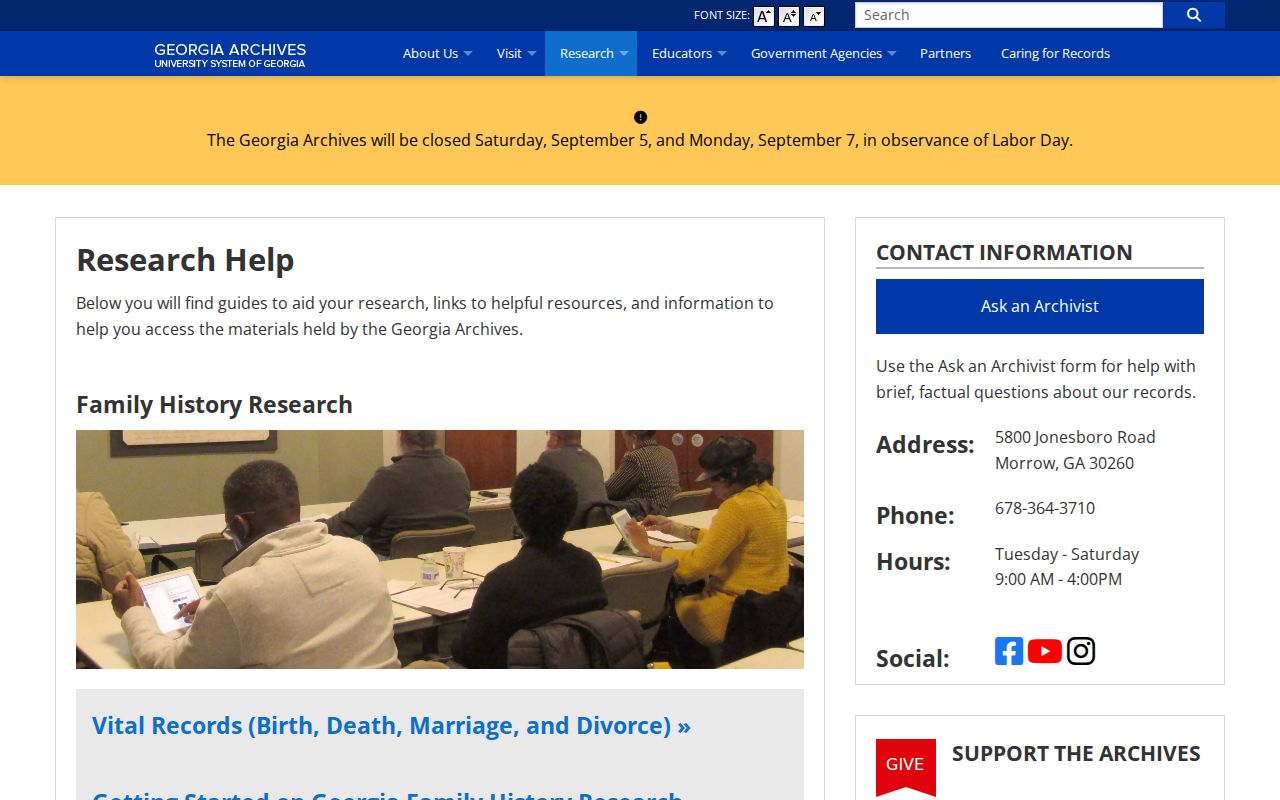
Archives sources help locate historical material. Still, every former-owner conclusion must return to the matching deed book and land description.
Separate Spalding Deed Roles
Not every name in a Spalding County deed index held title. A grantor gives up an interest. A grantee takes one. Yet some names fill other roles. Trustees, lenders, assignees, beneficiaries, and releasing parties show up on security instruments, not ownership deeds. Note: copy the instrument type before adding any name to a Spalding County property records timeline. Warranty, quitclaim, tax, executor, and administrator deeds all convey interests. Each carries different promises and authority. Security deeds, assignments, cancellations, and releases usually track debt instead. An easement grants use without moving the whole tract. Read the operative text and legal description. Do not treat every index row as a sale.
Resolve Spalding Estate Chain Breaks
A deceased owner leaves a gap in the chain. The gap sits between the last purchase deed and the next recorded sale. Search under the owner's name first, then try the estate name, personal representative, and trustee variants. Spalding County Probate Court handles wills and estate administration at the courthouse. It accepts filings by mail or in person. Its file may show who held authority to act. It is not the deed record, though. Once the representative is known, go back to the deed records. Hunt for an executor's, administrator's, or assent conveyance matching the same land. Record both capacity and book/page. Heirs who received interests through an order need the underlying document before joining the chain.
Choose Spalding Deed Access
Spalding County gives researchers several ways to pull deed records. Each serves a different depth of search. The online index, paid image access, the courthouse counter, mail requests, the Archives, and FamilySearch all have a place. GSCCCA offers regular, single-use, and premium accounts, plus per-page image printing. Prices shift, so confirm them on the live portal before ordering.
The courthouse route wins when the official index must be confirmed. It also wins when an old book lacks a web image. Ask for a plain or certified copy based on your purpose. When you know the exact book and page, say so. If not, give the parties, instrument type, approximate date, and legal description. That detail turns a broad former-owner question into a clean request. It becomes a request for an existing public record.
Extend Spalding County Owner Research
Spalding County's online deed index reaches back only to 1989. Older owner-of-record research still works through the deed books. Call clerk real-estate processing at 770-467-4356 with a book and page, the parties' names, the legal description, and a date range. Two deeper sources help with early parcel records. These are the Georgia Archives research help and the FamilySearch catalog. Search there by county, party, land lot, and book instead of a modern street address. Old deed records rarely follow today's numbering. Some digitized index images were reconstructed. Inconsistencies appear; verify any key match against the official clerk index before trusting it. A chain of title holds up only when every instrument covers the same interest in the same tract of land.
Online limit. Spalding's published online indicator begins in 1989. Earlier owners require deed books, Clerk help, or archival finding aids.